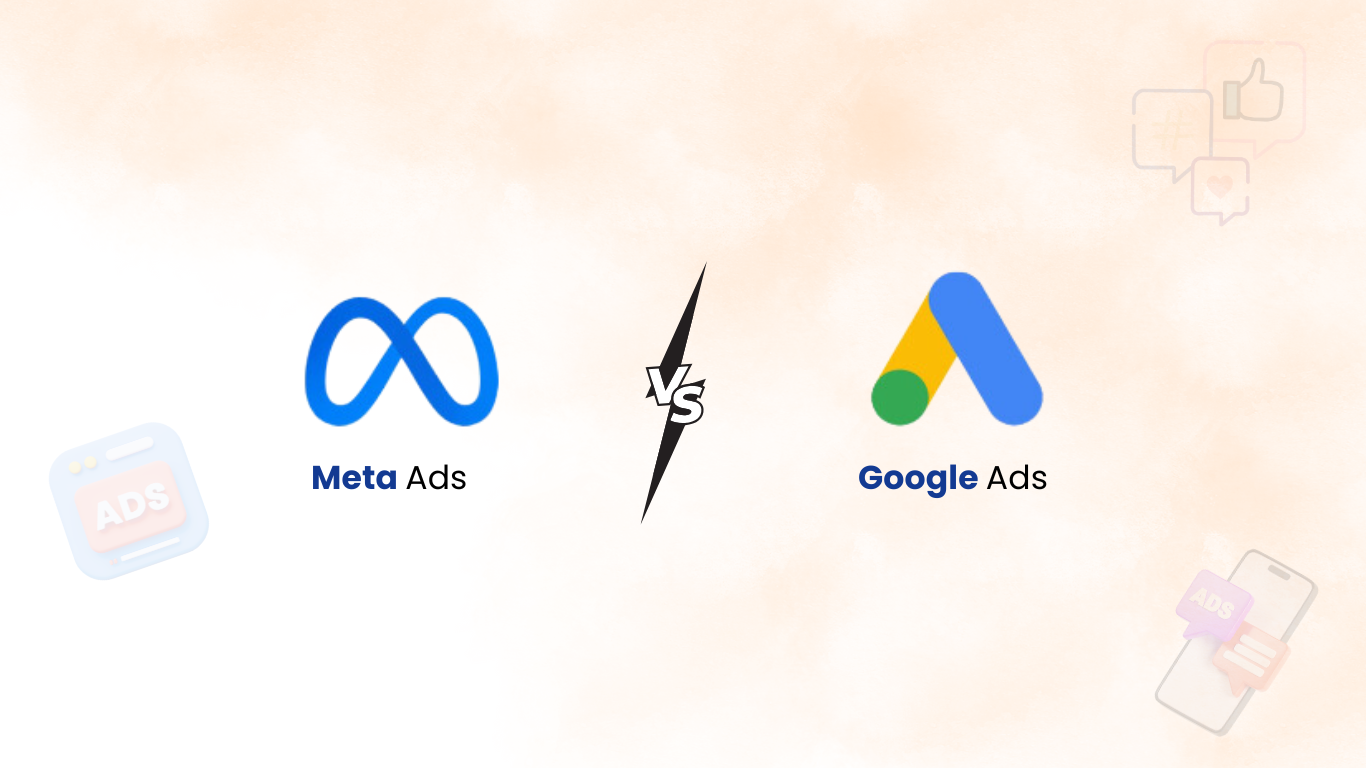
In today’s competitive digital landscape, businesses are constantly looking for the most effective way to reach their target audience and maximize return on investment. Two of the most powerful advertising platforms available are Google Ads and Meta Ads.
However, choosing between them can be challenging—especially when both platforms offer unique advantages. The key lies in understanding how each works and which aligns best with your business goals.
In this blog, we’ll break down the differences, benefits, and ideal use cases to help you make the right decision.
Google Ads: Intent-Based Marketing
Google Ads focuses on intent-based marketing. It
allows businesses to show ads to users who are actively searching for specific products or services. For
example, when someone searches for “best digital marketing agency near me,” Google Ads displays relevant ads
based on that query. This means you’re reaching users who already have a clear intent to take action.
Meta Ads: Interest-Based Marketing
Meta Ads (Facebook and Instagram) operates on an
interest-based model. Instead of targeting search queries, it targets users based on their interests,
behavior, and demographics. For instance, a user interested in fitness may see ads for gym memberships or
supplements while browsing social media. This approach helps businesses create demand and build brand
awareness.
1. Audience Targeting
Google Ads targets users based on what they are searching for,
while Meta Ads targets users based on who they are—their interests, habits, and online behavior. As a result,
Google Ads is ideal for capturing existing demand, whereas Meta Ads is better suited for creating demand.
2. Cost and Return on Investment
Google Ads typically has a higher cost per click, but
it often delivers stronger conversion rates due to high user intent. Meta Ads, on the other hand, generally
offers lower costs and is effective for reaching a broader audience. However, it may require more time and
strategy to convert users into customers.
3. Conversion Potential
Google Ads is known for driving immediate conversions,
especially for service-based and local businesses. Meta Ads excels in nurturing audiences through the
marketing funnel, making it highly effective for retargeting and long-term engagement.
4. Ad Formats and Creativity
Google Ads primarily relies on text-based and
search-driven ads, with limited creative flexibility. Meta Ads provides a wide range of visually engaging
formats, including images, videos, and reels, making it ideal for storytelling and brand building.
5. Ease of Use
Google Ads requires a strong understanding of keywords, bidding
strategies, and campaign structure. Meta Ads is generally easier to start with but demands continuous creative
testing and audience experimentation to achieve the best results.
You should consider using Google Ads if your goal is to generate immediate leads or sales. It is especially effective for businesses targeting high-intent customers, such as local services or urgent needs.
Meta Ads is a better choice if your focus is on building brand awareness, engaging audiences, or promoting visually appealing products like fashion, fitness, or lifestyle items.
Rather than choosing one platform over the other, many successful businesses use a combination of both. Meta Ads can be used to attract and engage potential customers, while Google Ads can capture users when they are ready to make a purchase. This creates a complete marketing funnel—from awareness to conversion.
Many businesses fail to get results from advertising due to avoidable mistakes. These include running ads without a clear strategy, choosing platforms based on trends rather than goals, neglecting landing page optimization, and failing to track conversions properly.
Conclusion
There is no single answer to whether Google Ads or Meta Ads is better. The
right choice depends on your business objectives, target audience, and marketing strategy. If your goal is
immediate results and high-intent leads, Google Ads is the better option. If you aim to build brand awareness
and long-term engagement, Meta Ads is more suitable. For the best results, a balanced approach that leverages
both platforms is highly recommended.
Websites, Apps, SEO, Branding and Digital Marketing — Everything your Business needs to Grow Online.
.svg)